Build a
network.
 JPMorgan
 Franklin Templeton
 T. Rowe Price
 Grove
Grove Wyoming FRNT
 Intain
 Kite AI
 Gunzilla
 Lamina1JPMorganFranklin TempletonT. Rowe PriceGroveWyoming FRNTIntainKite AIGunzillaLamina1JPMorganFranklin TempletonT. Rowe PriceGroveWyoming FRNTIntainKite AIGunzillaLamina1JPMorganFranklin TempletonT. Rowe PriceGroveWyoming FRNTIntainKite AIGunzillaLamina1




 BlackRock
 WisdomTree
 Janus Henderson
 California DMV
 Securitize
 StraitsX
 MapleStory
 UPTNBlackRockWisdomTreeJanus HendersonCalifornia DMVSecuritizeStraitsXMapleStoryUPTNBlackRockWisdomTreeJanus HendersonCalifornia DMVSecuritizeStraitsXMapleStoryUPTNBlackRockWisdomTreeJanus HendersonCalifornia DMVSecuritizeStraitsXMapleStoryUPTN
Technologybuilt forbusiness.
STAKE SECURING THE NETWORK$1,846,928,134.20210,836,545 AVAX · 44.9% OF TOTAL SUPPLY












Own the chain.Set the rules.
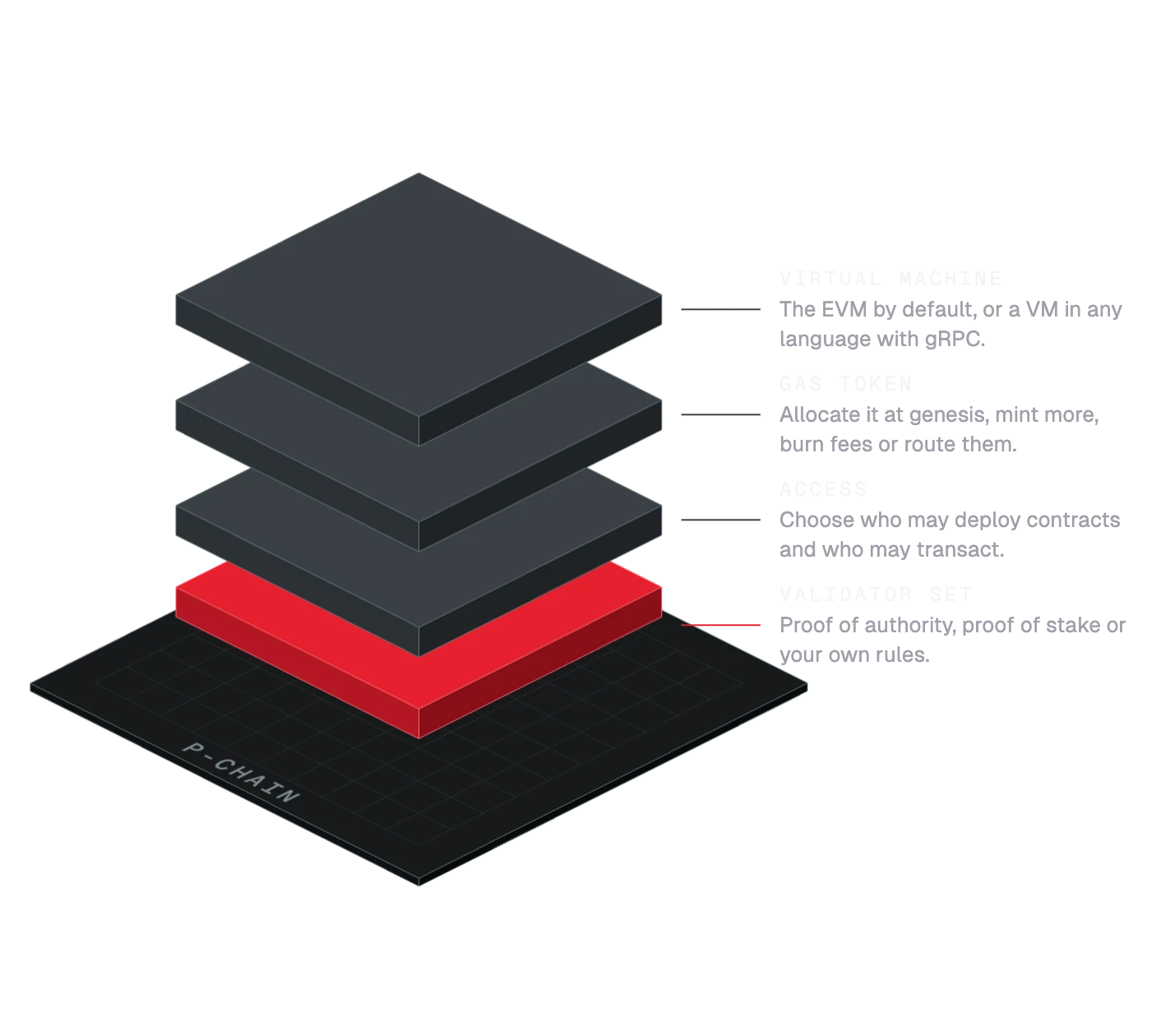
An Avalanche L1 is a blockchain for your application alone. It can require its validators to be in a given country, pass KYC/AML checks or hold a license.
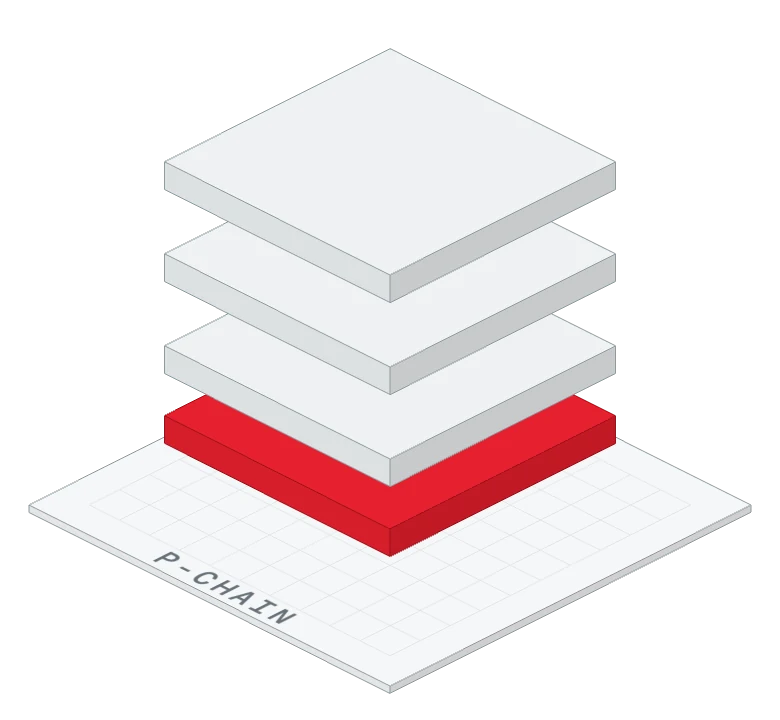
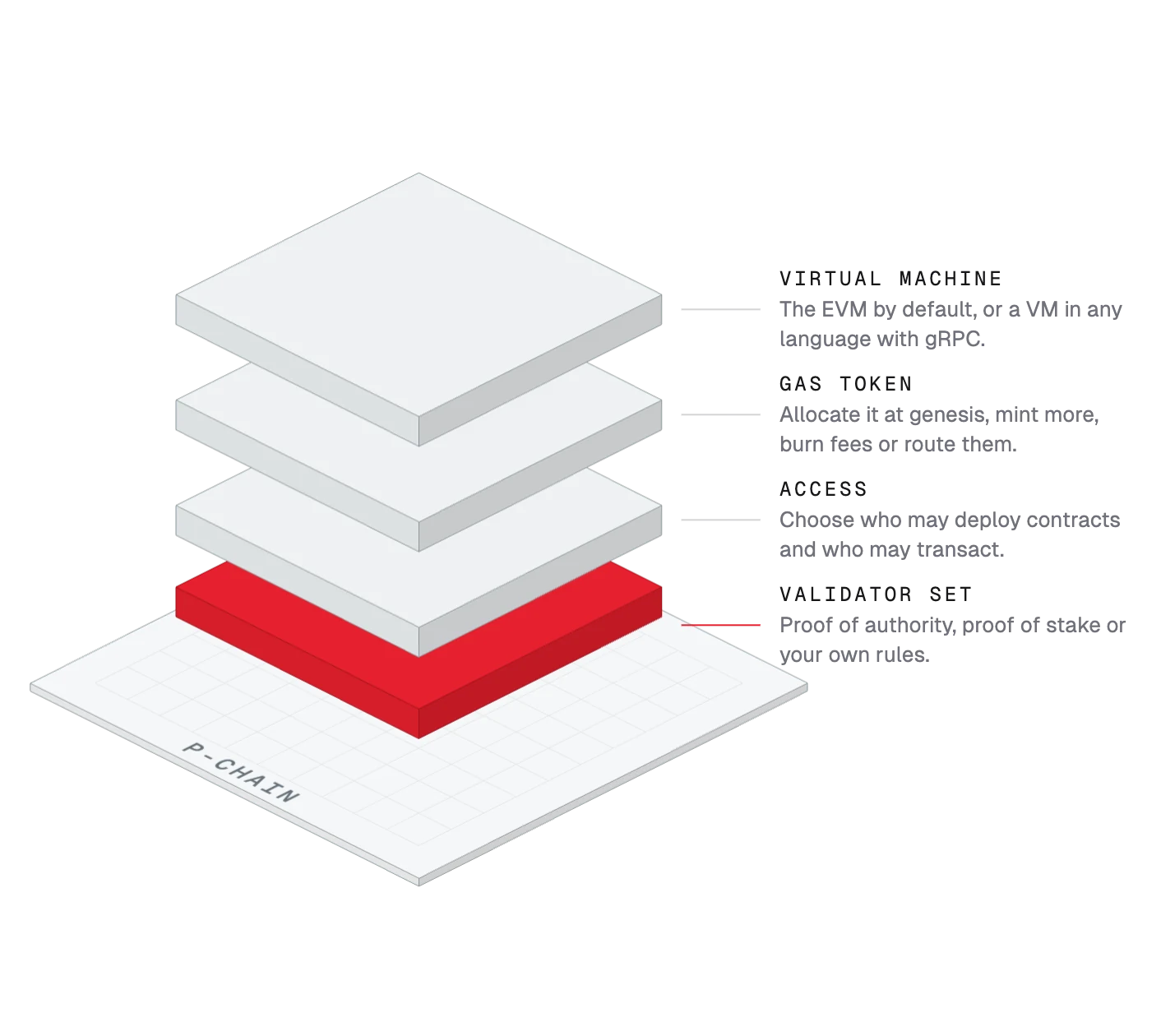
more than 99.9%
less upfront cost to launch an L1 since the Etna upgrade in December 2024.
about 1.33 AVAX
a month in P-Chain fees per L1 validator.
2 cores
with 4 GB of RAM and 100 GB of storage run an L1 validator under 10 TPS.
Final in a second or less.No reorgs.
A transaction is final when consensus accepts its block. Apps and exchanges need no extra confirmations.
under 0.5 seconds
Your L1about 1 seconds
C-ChainShown at true speed. Sources: AvaCloud for its L1s, the Avalanche docs for the C-Chain.
Any L1 can connect.No bridge operator.
With Interchain Messaging (ICM), the sending chain's validators sign each message. The receiving chain checks the signatures against the sender's validator set on the P-Chain.
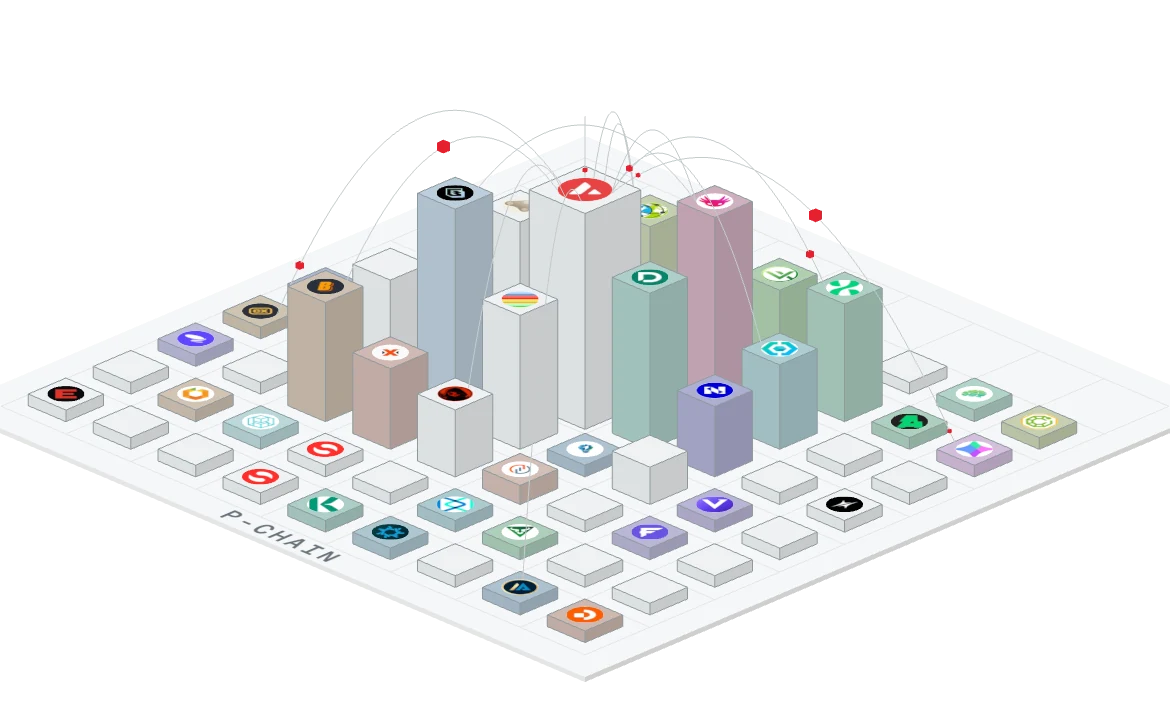
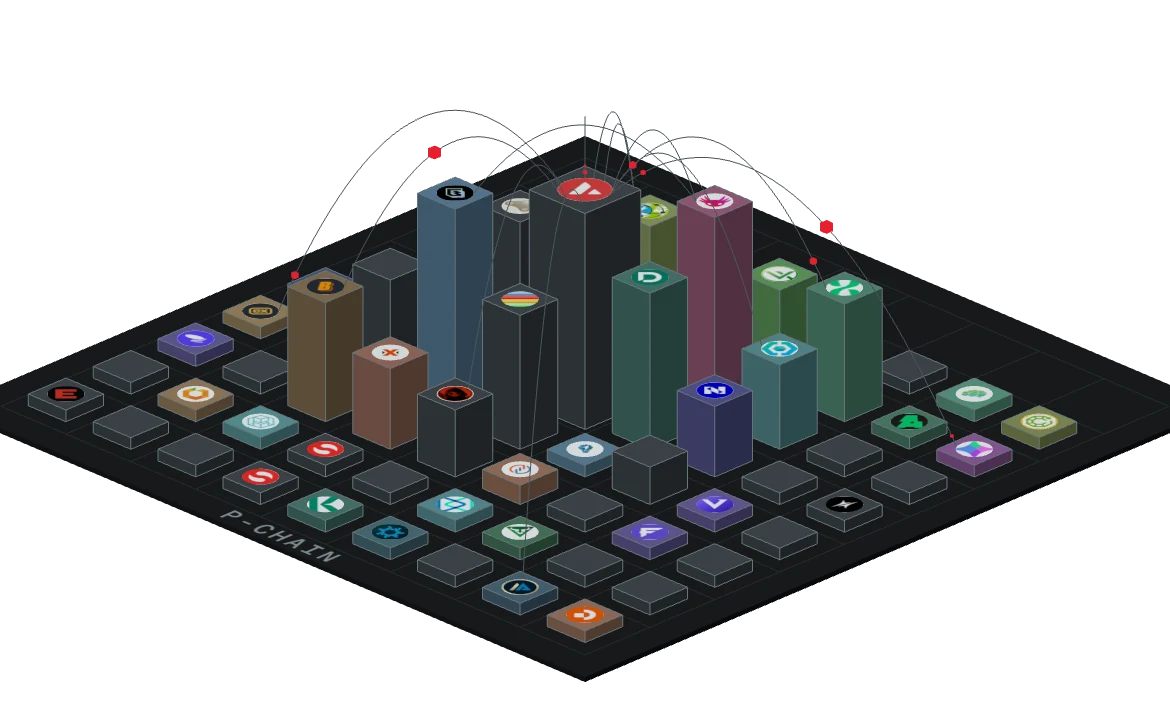
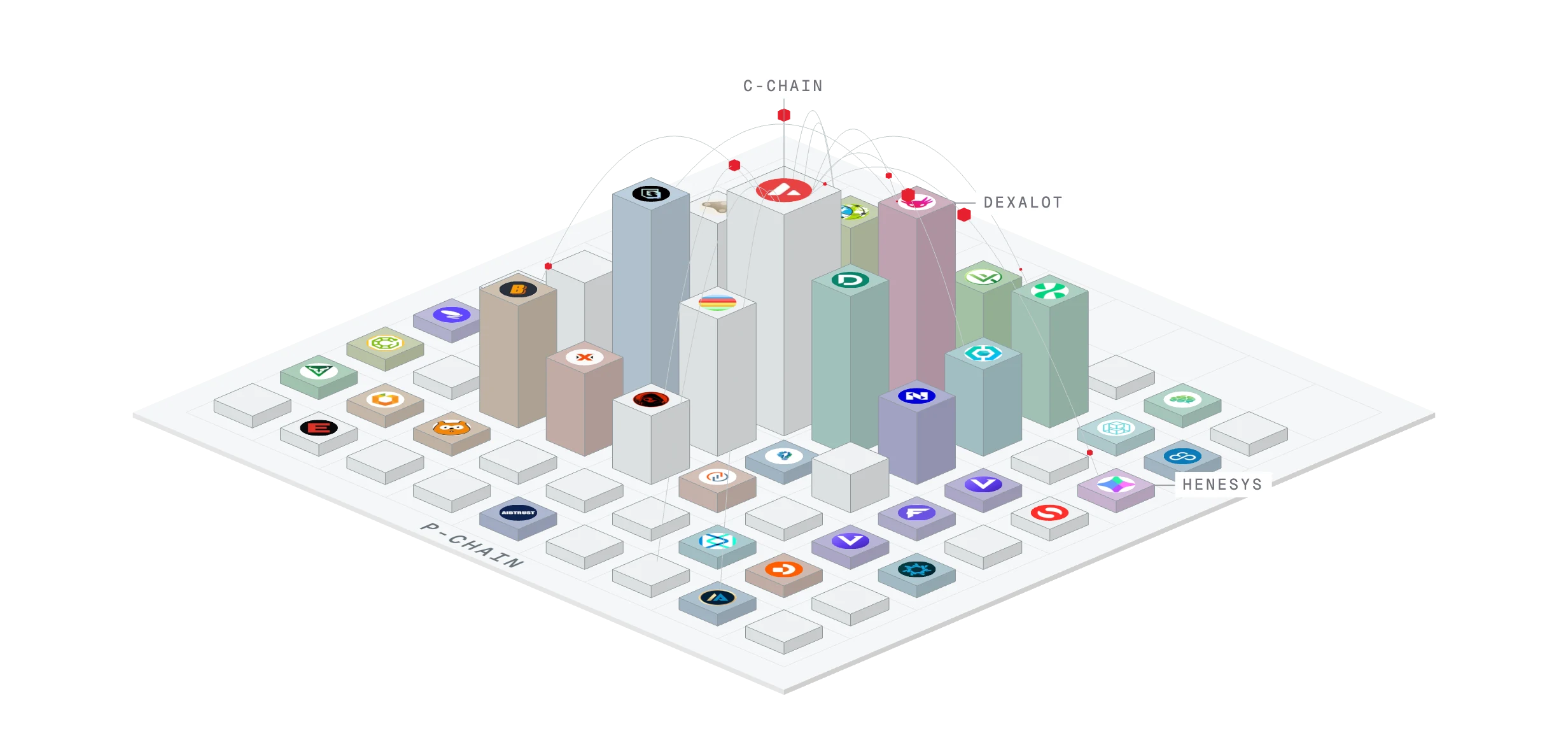
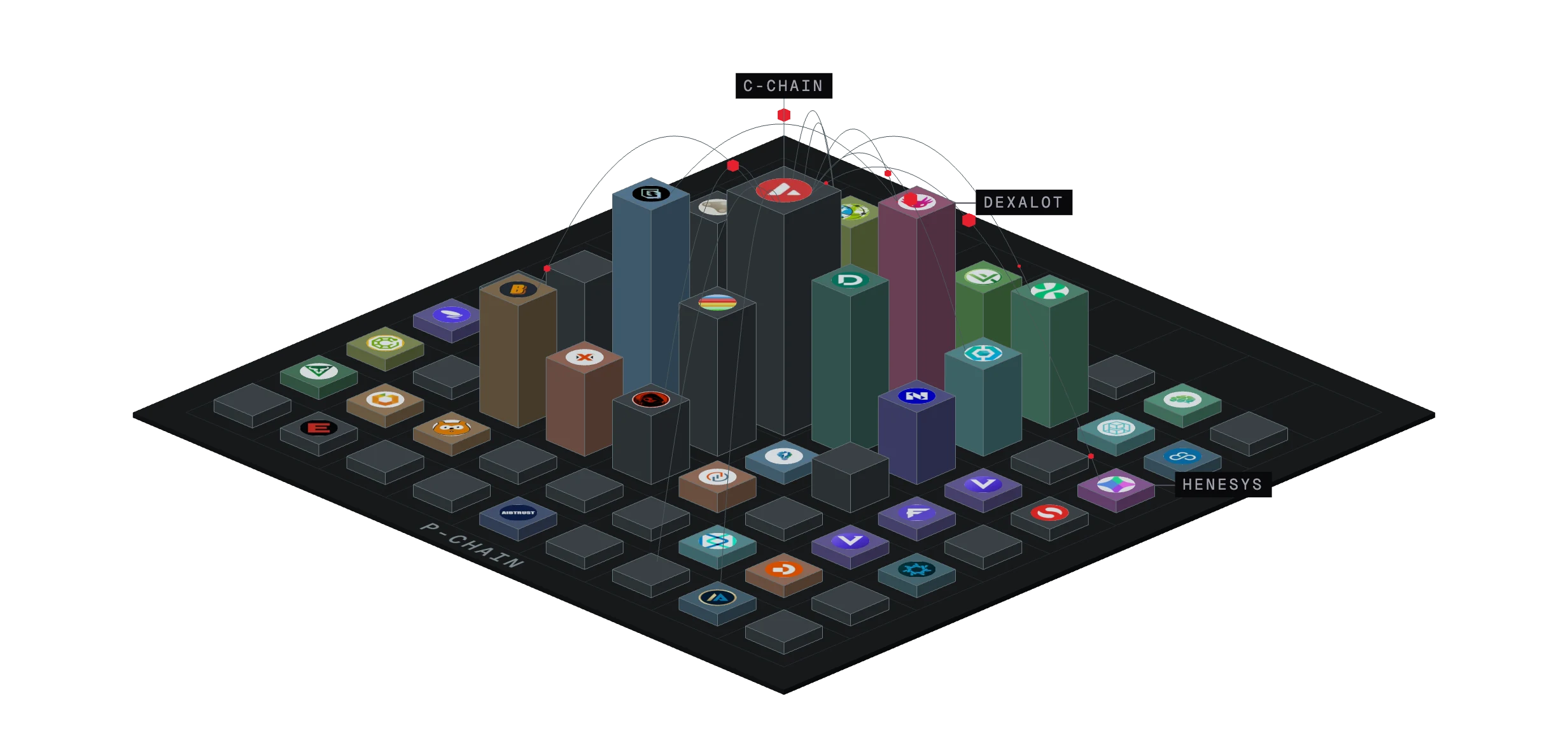
Height: transactions in 30 days, on a log scale. Base height: no indexed count. Red: ICM messages in the same 30 days.
32.6K
ICM messages between these chains in the last 30 days.
67%
of the sender's stake must sign each message, by default.
Already in production.
Institutions run funds, credit, securities and stablecoins on the C-Chain and on L1s.
BlackRock BUIDLA tokenized fund on the C-Chain, issued through Securitize. Galaxy CLO 2025-1Tokenized private credit, issued natively on Avalanche. $75M at the initial closing.Wyoming FRNTA state-issued, dollar-pegged stablecoin. Holders spend it with Rain-issued Visa cards.
 Dinari Financial NetworkAn Avalanche L1 for tokenized U.S. public securities.Intain MarketPermissioned structured finance on an L1. Its gateway serves 2,000+ regional banks.
 Circle USDCNative USDC on the C-Chain. CCTP moves it to other supported chains with no wrapped token.
Build yours.
Your own L1
Deploy an L1 on the Fuji testnet in one click, with a managed validator node.
Your app on the C-Chain
Deploy Solidity contracts and verify them from Foundry or Hardhat. Each transaction is final in about a second.